Unforgettable Nicknames For Your Cherished Best Friends
 Olivia Bennett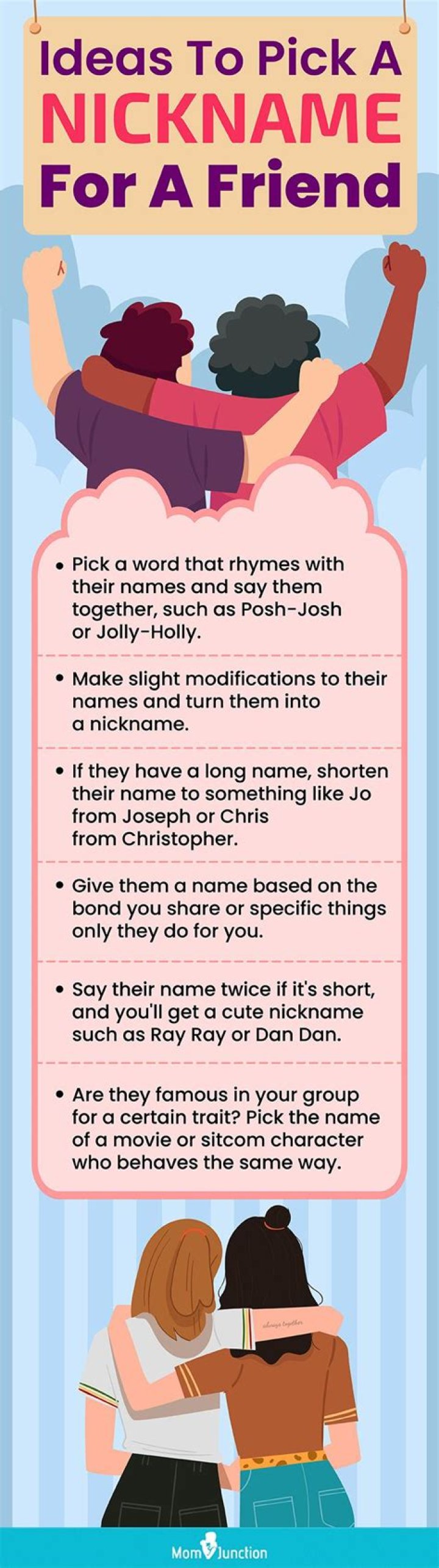
Do you have a special nickname for your best friend? If so, you're not alone! Nicknames are a common way to show affection and closeness between friends.
Nicknames can be anything from a simple abbreviation of a person's name to a completely made-up word. They can be funny, sarcastic, or even downright mean. But no matter what they are, nicknames are a way to show that you care about someone and that you have a special bond with them.
There are many different reasons why people give their friends nicknames. Sometimes, a nickname is simply a way to make a person's name more unique or memorable. Other times, a nickname can be a way to poke fun at a person's personality or appearance. And still other times, a nickname can be a way to show affection or endearment.
No matter what the reason, nicknames are a fun and harmless way to show your friends how much you care about them. So if you don't already have a nickname for your best friend, now is the perfect time to come up with one!
Nicknames for Best Friends
Nicknames for best friends serve as unique identifiers, reflecting the close bond shared between individuals. They encompass various dimensions, each holding significance in shaping the dynamics of friendship.
- Identity and Distinction: Nicknames differentiate individuals within a group, creating a sense of familiarity and belonging.
- Affection and Intimacy: They convey warmth and closeness, fostering a sense of comfort and trust.
- Humor and Playfulness: Nicknames often inject humor into friendships, adding a lighthearted element.
- Inside Jokes and Shared Experiences: They can stem from shared experiences or private jokes, creating a sense of exclusivity.
- Cultural and Social Context: Nicknames may reflect cultural norms or social dynamics, shaping the way individuals interact.
These aspects intertwine to create a rich tapestry of nicknames for best friends, serving as verbal expressions of the unique and enduring bonds we share with those closest to us.
Identity and Distinction
Nicknames for best friends play a crucial role in establishing and reinforcing individual identities within a close-knit group. By assigning unique nicknames to one another, friends create a sense of distinction and belonging that sets them apart from others.
In social psychology, the concept of self-categorization theory suggests that individuals define themselves in terms of the groups they belong to. Nicknames contribute to this process by providing a shared label that symbolizes the close bond between friends. This shared identity can enhance feelings of belonging and foster a sense of camaraderie.
Moreover, nicknames often reflect personal traits, characteristics, or shared experiences that are unique to the friendship group. For example, a friend who is known for their quick wit might be given the nickname "Spark," while a friend who is always there for support might be called "Rock."
These nicknames not only differentiate individuals but also create a shared language and culture within the friendship group. They serve as verbal cues that reinforce the bonds between friends and create a sense of familiarity and exclusivity.
Affection and Intimacy
Nicknames for best friends serve as powerful expressions of affection and intimacy, fostering a deep sense of comfort and trust within the friendship bond. These nicknames are not mere labels but rather verbal affirmations of the close emotional connection shared between friends.
When friends use affectionate nicknames for one another, they create a private language that conveys warmth and closeness. These nicknames often carry personal significance and reflect the unique dynamics of the friendship. For example, a friend who is always there for support and encouragement might be called "Sunshine," while a friend who brings joy and laughter to the group might be called "Smiley."
The use of affectionate nicknames also contributes to a sense of comfort and trust within the friendship. By using these nicknames, friends communicate that they feel safe and secure in each other's presence. They create a space where they can be themselves and share their thoughts and feelings without judgment.
Furthermore, affectionate nicknames can help to strengthen the emotional bond between friends. When friends use these nicknames, they are essentially saying, "I know you well, and I care about you deeply." This can lead to a deeper sense of intimacy and connection.
In conclusion, the use of affectionate nicknames for best friends is a powerful way to convey warmth, closeness, comfort, and trust. These nicknames are not just words but rather symbols of the deep emotional connection shared between friends.
Humor and Playfulness
Nicknames for best friends often incorporate humor and playfulness, creating a lighthearted and enjoyable atmosphere within the friendship. This playful use of language not only adds a touch of fun to interactions but also strengthens the bond between friends.
Humor can help to diffuse tension, resolve conflicts, and create a sense of camaraderie. When friends use humorous nicknames for one another, they are essentially saying, "I can joke around with you, and you can joke around with me." This playful banter can help to build trust and strengthen the friendship.
Playfulness is another important aspect of nicknames for best friends. Playfulness suggests a sense of spontaneity, creativity, and imagination. When friends use playful nicknames for one another, they are demonstrating their willingness to be silly and carefree. This can help to create a more relaxed and enjoyable atmosphere within the friendship.
In conclusion, the use of humor and playfulness in nicknames for best friends is a valuable way to add a lighthearted element to the friendship. Humor and playfulness can help to diffuse tension, resolve conflicts, and create a sense of camaraderie. They can also help to build trust and strengthen the bond between friends.
Inside Jokes and Shared Experiences
Nicknames for best friends often stem from inside jokes or shared experiences, creating a sense of exclusivity and camaraderie within the friendship group. These nicknames serve as verbal cues that reinforce the unique bond between friends and create a shared language that is only understood by those within the group.
Inside jokes can be anything from a funny story that happened between friends to a private reference that only makes sense to them. When friends use these inside jokes as nicknames for one another, they are essentially saying, "We have a special connection that no one else understands." This can be a powerful way to strengthen the bond between friends and create a sense of belonging.
Shared experiences can also be a source of nicknames for best friends. These nicknames might refer to a particular event that the friends experienced together, such as a trip they took or a class they shared. By using these shared experiences as nicknames, friends are creating a verbal reminder of the special moments they have shared together.
The use of inside jokes and shared experiences in nicknames for best friends is a valuable way to create a sense of exclusivity and camaraderie within the friendship group. These nicknames are not just words but rather symbols of the deep connection that friends share.
Cultural and Social Context
Nicknames for best friends are often shaped by the cultural and social context in which they are used. In some cultures, for example, it is common to give nicknames that reflect a person's physical appearance or personality traits. In other cultures, nicknames may be more formal or respectful.
The social dynamics of a friendship group can also influence the nicknames that are used. For example, friends who share a common interest or hobby may give each other nicknames that reflect that interest. Friends who have known each other for a long time may also develop nicknames that are based on inside jokes or shared experiences.
Understanding the cultural and social context of nicknames for best friends is important for understanding the way that they are used and interpreted. Nicknames can be a powerful way to express affection, intimacy, and humor. They can also be a way to show respect or to mark a person's place within a social group.
Here are some examples of how cultural and social context can influence nicknames for best friends:
- In some cultures, it is common to give nicknames that are based on a person's physical appearance. For example, a friend who is tall and thin might be nicknamed "Stretch" or "String Bean."
- In other cultures, nicknames may be more formal or respectful. For example, in some Asian cultures, it is common to use a person's title or last name as a nickname.
- The social dynamics of a friendship group can also influence the nicknames that are used. For example, friends who share a common interest or hobby may give each other nicknames that reflect that interest. Friends who have known each other for a long time may also develop nicknames that are based on inside jokes or shared experiences.
Understanding the cultural and social context of nicknames for best friends is important for understanding the way that they are used and interpreted.
FAQs on Nicknames for Best Friends
Here are some frequently asked questions about nicknames for best friends, along with informative answers:
Question 1: What are the benefits of using nicknames for best friends?
Answer: Nicknames for best friends can serve various purposes, including fostering intimacy, creating a sense of belonging, and adding a touch of humor and playfulness to the friendship. They can also be a way to show affection and to mark a person's place within a social group.
Question 2: How do I choose a good nickname for my best friend?
Answer: When choosing a nickname for your best friend, consider their personality, interests, and physical appearance. You can also use inside jokes or shared experiences as inspiration. The most important thing is to choose a nickname that is meaningful to both of you.
Question 3: Is it okay to use nicknames for best friends in all situations?
Answer: While nicknames can be a fun and harmless way to show affection, it is important to be mindful of the context in which you use them. Avoid using nicknames in formal settings or when you are meeting your friend's friends or family for the first time.
Question 4: What should I do if my best friend doesn't like their nickname?
Answer: If your best friend doesn't like their nickname, the best thing to do is to respect their wishes and stop using it. You can apologize for any offense caused and explain that you were only trying to be affectionate. A good friend will understand.
Question 5: Can nicknames for best friends change over time?
Answer: Yes, it is common for nicknames for best friends to change over time. As friendships grow and evolve, so too can the nicknames that are used. New nicknames may be adopted to reflect new inside jokes or shared experiences.
Summary: Nicknames for best friends can be a fun and meaningful way to show affection and intimacy. When choosing and using nicknames, it is important to be mindful of the context and to respect your friend's wishes.
To explore more about nicknames for best friends, continue reading the provided article.
Nicknames for Best Friends
Throughout this exploration of nicknames for best friends, we have uncovered their multifaceted nature. Nicknames serve as markers of identity, convey warmth and closeness, inject humor and playfulness, draw upon shared experiences, and reflect cultural and social contexts. They are not mere labels, but rather verbal expressions of the unique and enduring bonds we share with those closest to us.
As we navigate the complexities of human relationships, nicknames for best friends stand as a testament to the power of language in shaping our social interactions. They have the ability to strengthen friendships, create a sense of belonging, and add a touch of joy to our lives. By understanding and embracing the significance of nicknames, we can deepen our connections with others and foster a greater sense of community.
The Renowned Producer Mark Emms: Crafting Musical Masterpieces
The Most Expensive Luxuries In The World: Unveiling The Ultimate Splendors
Linda Hogan: Mother Of WWE Star Brooke Hogan