The Ultimate Guide To Captivating Half-Orc Names
 Christopher Pierce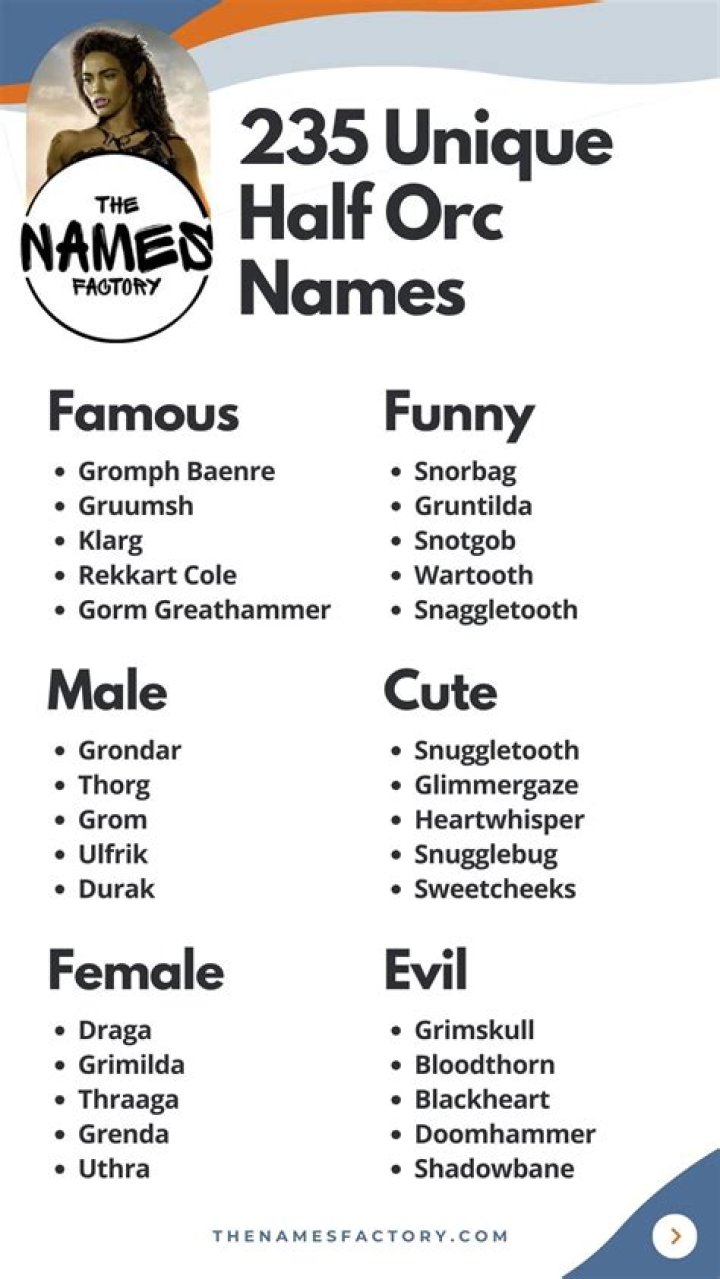
What is a half-orc, and why do they have such unique names? Half-orcs are the offspring of orcs and humans, and their names reflect their dual heritage.
Half-orc names are often a combination of orcish and human elements. The orcish elements are typically harsh and guttural, while the human elements are more melodic and lyrical. This combination creates a name that is both unique and memorable.
Half-orc names are more than just a way to identify an individual. They are also a reflection of the half-orc's personality and heritage. A half-orc with a strong orcish name is likely to be more aggressive and warlike, while a half-orc with a more human name is likely to be more civilized and diplomatic.
Half-orc names are a fascinating and complex part of half-orc culture. They are a reflection of the half-orc's dual heritage and their unique place in the world.
Half-Orc Names
Half-orc names are a unique and fascinating part of half-orc culture. They are a reflection of the half-orc's dual heritage and their unique place in the world. Here are six key aspects of half-orc names:
- Combination of orcish and human elements
- Harsh and guttural orcish elements
- Melodic and lyrical human elements
- Reflection of the half-orc's personality and heritage
- Aggressive and warlike orcish names
- Civilized and diplomatic human names
Half-orc names are more than just a way to identify an individual. They are also a reflection of the half-orc's culture and history. For example, the name "Gronn" is a common orcish name that means "stonebreaker." A half-orc with this name is likely to be strong and powerful. The name "Aella" is a common human name that means "storm." A half-orc with this name is likely to be fierce and independent.
Half-orc names are a complex and fascinating part of half-orc culture. They are a reflection of the half-orc's dual heritage and their unique place in the world.
Combination of Orcish and Human Elements
Half-orc names are a unique and fascinating part of half-orc culture. They are a reflection of the half-orc's dual heritage and their unique place in the world. One of the most striking features of half-orc names is their combination of orcish and human elements.
The orcish elements of half-orc names are typically harsh and guttural, while the human elements are more melodic and lyrical. This combination creates a name that is both unique and memorable. For example, the name "Gronn" is a common orcish name that means "stonebreaker." A half-orc with this name is likely to be strong and powerful. The name "Aella" is a common human name that means "storm." A half-orc with this name is likely to be fierce and independent.
The combination of orcish and human elements in half-orc names is a reflection of the half-orc's dual heritage. Half-orcs are the offspring of orcs and humans, and their names reflect this unique lineage. Half-orc names are a way to celebrate the half-orc's heritage and to honor the cultures of both orcs and humans.
Harsh and guttural orcish elements
The harsh and guttural elements of orcish names are a reflection of the orcish culture. Orcs are a warlike and brutal people, and their language reflects this. Orcish names are often short and to the point, with a heavy emphasis on consonants. This creates a name that is both intimidating and memorable.
- Strength and power
Orcish names often reflect the strength and power of the orcish people. For example, the name "Gronn" means "stonebreaker." This name is a reflection of the orc's strength and their ability to crush their enemies.
- Ferocity and aggression
Orcish names also reflect the ferocity and aggression of the orcish people. For example, the name "Aella" means "storm." This name is a reflection of the orc's fierce and aggressive nature.
- Harshness and brutality
Orcish names are often harsh and brutal, reflecting the harsh and brutal nature of orcish culture. For example, the name "Grak" means "toothbreaker." This name is a reflection of the orc's brutality and their willingness to fight to the death.
- Intimidation and fear
Orcish names are often designed to intimidate and instill fear in their enemies. For example, the name "Kargath" means "butcher." This name is a reflection of the orc's willingness to kill and their enjoyment of battle.
The harsh and guttural elements of orcish names are a reflection of the orcish culture. These names are a way to celebrate the orc's strength, power, and ferocity. They are also a way to intimidate and instill fear in their enemies.
Melodic and lyrical human elements
In the realm of half-orc names, the melodic and lyrical elements stand in stark contrast to the harshness of their orcish counterparts. These human elements bring a sense of beauty and grace to the often brutal and guttural orcish names.
- Euphony and aesthetics
Human names often prioritize euphony and aesthetic appeal, employing melodic vowel combinations and rhythmic patterns. By incorporating these elements, half-orc names gain a pleasing sound that is easy on the ear.
- Cultural heritage
Human elements in half-orc names serve as a testament to the rich cultural heritage of humanity. They reflect the values, traditions, and history of human societies, adding a layer of depth and meaning to the names.
- Civilization and refinement
The lyrical quality of human names suggests a level of civilization and refinement that is often lacking in orcish culture. Half-orc names that incorporate these elements hint at the half-orc's desire for acceptance and integration into human society.
- Duality and balance
The presence of both melodic and lyrical human elements alongside harsh orcish elements in half-orc names symbolizes the duality of their nature. These names encapsulate the struggle between the savage and the civilized, the brutal and the beautiful, within the half-orc's soul.
The melodic and lyrical human elements in half-orc names are a testament to the complex and multifaceted nature of half-orc identity. They represent the half-orc's longing for beauty, their connection to human culture, and their struggle to reconcile their dual heritage.
Reflection of the half-orc's personality and heritage
Half-orc names are not merely labels; they are echoes of the half-orc's complex personality and heritage. The name a half-orc bears often reflects their unique blend of orcish and human traits, their personal experiences, and their aspirations.
A half-orc named Gronn might embody the strength and ferocity of their orcish ancestry, while a half-orc named Aella might possess the grace and cunning of their human lineage. The name Grak might hint at a half-orc's brutal past, while the name Kargath might suggest a half-orc's thirst for battle.
Beyond these basic associations, half-orc names can also reveal the half-orc's personal experiences and aspirations. A half-orc who has overcome great adversity might adopt a name like Stoutheart, while a half-orc who seeks to prove their worth in human society might choose a name like Aetherion. The name Whisperwind might suggest a half-orc's connection to the natural world, while the name Sunstrider might hint at a half-orc's desire for a brighter future.
Understanding the connection between half-orc names and the half-orc's personality and heritage is crucial for anyone who wishes to interact with half-orcs in a meaningful way. By recognizing the significance of names in half-orc culture, we can better appreciate the complexity and diversity of this unique people.
Aggressive and warlike orcish names
In the realm of half-orc names, the influence of aggressive and warlike orcish names is undeniable. These names, often harsh and guttural, reflect the orcish heritage of half-orcs and embody the strength, ferocity, and martial prowess of their orcish ancestors.
- Strength and power
Orcish names often convey the strength and power of the orcish people. Names like "Gronn," meaning "stonebreaker," or "Grak," meaning "toothbreaker," evoke images of mighty warriors capable of crushing their foes.
- Ferocity and aggression
The ferocity and aggression of orcs are also reflected in their names. "Aella," meaning "storm," or "Kargath," meaning "butcher," suggest a relentless and savage nature, instilling fear in the hearts of enemies.
- Tribal affiliations
Orcish names often indicate the tribe or clan to which an orc belongs. Names like "Bloodfang" or "Stormsong" create a sense of belonging and unity within the orcish community.
- Cultural values
Orcish names embody the cultural values of orcish society, emphasizing strength, honor, and loyalty. Names like "Warhammer" or "Battleaxe" reflect the orcish reverence for martial prowess and their willingness to fight for what they believe in.
The presence of aggressive and warlike orcish names in half-orc names serves as a reminder of the half-orc's orcish heritage and the influence of orcish culture on their identity. These names are not merely labels but symbols of strength, ferocity, and cultural pride.
Civilized and diplomatic human names
In the realm of half-orc names, the presence of civilized and diplomatic human names stands in stark contrast to the aggressive and warlike orcish names. These human names, often melodic and lyrical, reflect the half-orc's desire for acceptance and integration into human society.
The incorporation of civilized and diplomatic human names into half-orc names is a testament to the half-orc's complex and multifaceted identity. Half-orcs are not merely the sum of their orcish and human heritage; they are unique individuals with their own aspirations and desires. By adopting human names, half-orcs signal their willingness to embrace human culture and values.
Furthermore, the use of civilized and diplomatic human names can be a strategic choice for half-orcs. In a world often hostile to their kind, half-orcs with human names may find it easier to gain acceptance and avoid discrimination. By adopting a name that conforms to human norms, half-orcs can increase their chances of success in human society.
The connection between civilized and diplomatic human names and half-orc names is a reminder of the half-orc's struggle for identity and acceptance. Half-orcs are not simply orcs or humans; they are a unique people with their own culture and values. By embracing both their orcish and human heritage, half-orcs create a new and distinct identity that is both fierce and civilized, both savage and sophisticated.
Frequently Asked Questions about Half-Orc Names
Half-orc names are a unique and fascinating aspect of half-orc culture. They reflect the half-orc's dual heritage and their unique place in the world. Here are answers to some frequently asked questions about half-orc names:
Question 1: What are half-orc names like?
Half-orc names are a combination of orcish and human elements. The orcish elements are typically harsh and guttural, while the human elements are more melodic and lyrical. This combination creates a name that is both unique and memorable.
Question 2: What do half-orc names mean?
Half-orc names can have a variety of meanings. Some names reflect the half-orc's strength and power, while others reflect their ferocity and aggression. Still other names reflect the half-orc's desire for acceptance and integration into human society.
Question 3: How are half-orc names chosen?
Half-orc names are typically chosen by the half-orc's parents. The parents may choose a name that reflects the half-orc's personality, heritage, or appearance. Some half-orcs also choose to change their names later in life to reflect their own unique identity.
Question 4: What are some common half-orc names?
Some common half-orc names include: Gronn, Aella, Grak, Kargath, Stoutheart, Aetherion, Whisperwind, and Sunstrider.
Question 5: What is the significance of half-orc names?
Half-orc names are more than just a way to identify an individual. They are also a reflection of the half-orc's culture and history. Half-orc names can reveal the half-orc's personality, heritage, and aspirations.
Question 6: How should I address a half-orc by their name?
When addressing a half-orc by their name, it is important to be respectful of their culture. Half-orcs typically prefer to be addressed by their full name. It is also important to avoid using derogatory terms or nicknames.
Half-orc names are a complex and fascinating part of half-orc culture. They are a reflection of the half-orc's dual heritage and their unique place in the world.
Next Section: Half-Orc Naming Conventions
Conclusion on Half-Orc Names
Half-orc names are a unique and fascinating aspect of half-orc culture. They are a reflection of the half-orc's dual heritage and their unique place in the world. Half-orc names can be harsh and guttural, melodic and lyrical, or a combination of both. They can reflect the half-orc's strength, power, ferocity, aggression, or desire for acceptance and integration into human society.
Half-orc names are more than just a way to identify an individual. They are also a reflection of the half-orc's culture, history, personality, and heritage. When addressing a half-orc by their name, it is important to be respectful of their culture and to avoid using derogatory terms or nicknames.
Elevate Your Spiritual Journey With Heartfelt Birthday Messages
The Ultimate Collection Of Art Humor Quotes: Laughter And Creativity
The Untold Story Of Lil Baby's Baby Mother